Share this Article :


Stay Ahead with Living Impact
Get Exclusive Insights and the Latest Trends Straight to Your Inbox.
We respect your privacy. Unsubscribe at any time.


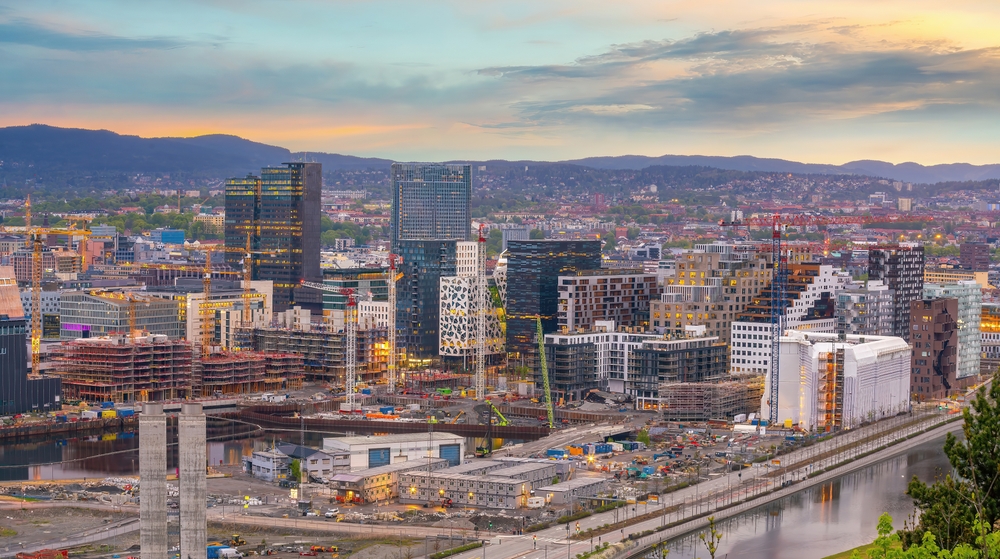
Prices on pause, pressure building: why this autumn is Oslo's buyer's window
Living Impact publishes its Autumn 2026 Oslo Residential Market Report on the day Norges Bank raised rates to 4.50%. The picture it paints is unusual: a flat market, a record number of homes for sale, and a construction pipeline that has already been cut off.
Oslo home prices have gone nowhere in 2026. Up 0.3% between January and August, against 4.9% for Norway as a whole, the capital is the one major market in the country standing still. Ålesund is up 12.4%. Tromsø is up 11.7%. Oslo, the deepest and most liquid housing market in Norway, is on pause.
That is not a sign of weak demand. It is a supply story, and a temporary one.
Why Oslo has stalled
Higher interest rates and tougher tax rules have made small-scale letting unprofitable, so private landlords are selling. Oslo has lost more than 10,000 second homes since 2019, and those flats have landed on the resale market all at once. The number of used homes for sale hit almost 3,900 in May, a level not seen since the 2008 financial crisis.
The difference from 2008 is speed. Homes still sell in about 33 days. Buyers are there. There is simply more to choose from than at any point in nearly two decades.
EiendomsMegler 1 expects up to 9,000 more rental flats to be sold over the next two years. After that, the wave is spent.
What is not temporary
Behind the sell-off sits a problem with no end date: Norway has all but stopped building homes.
Just 13,659 new homes were sold nationally over the past twelve months, against a need of about 28,200 a year. August was the weakest August for new home sales since records began in 2010. A new home now costs around 30% more than a similar used one, so few projects can start.
Oslo will complete about 1,000 homes this year. Projects now on sale point to 661 completions in 2027 and 1,317 in 2028, against roughly 5,000 needed each year. Building permits in 2025 were the fewest since 2009, and homes take two to three years to build. Homes not sold to buyers today will not exist in 2029.
Meanwhile the city keeps growing. Oslo has about 729,000 residents, 11% more than a decade ago, and Statistics Norway's main projection adds a further 110,000 by 2050.
Renters are paying the price
Every flat a landlord sells to an owner-occupier is one less home to rent. Second homes are now a record-low 11.1% of Oslo's housing stock. Rents in Oslo rose 4.7% over the past year, and newly signed leases jumped 6.9% in just three months this summer. Across Norway, rents are up 32% since early 2022, well ahead of the 20% rise in consumer prices.
The people Oslo depends on are caught in the middle. A single nurse could afford just 3.3% of Oslo homes in the first half of 2026. In 2015 it was about one in five. Two in three first-time buyers now rely on help from their parents.
What 4.50% changes
On 24 September Norges Bank lifted the policy rate to 4.50%, the highest of this cycle, and signalled it expects to hold there for some time. Most Norwegian mortgages float, so the rise reaches landlords within weeks and keeps first-time buyers on the sidelines.
For anyone who bought at the top, that hurts. For a buyer with capital entering now, it is why the price is right. Higher rates keep prices flat and sellers motivated for longer, and they add no new supply. Handelsbanken estimates that a one-point move in mortgage rates shifts Oslo prices by about 16% over time, in both directions. The higher rates go now, the further Oslo moves when they turn.
The whole-building discount
Older rental buildings sold whole in Oslo have traded at about 31% below the value of the flats inside them since 2023. Few buyers can write the large cheque, and most lenders are cautious. Investors have noticed: housing has grown from 6% to 8% of Norwegian property transactions this year while offices have fallen from 40% to 24%.
Living Impact Residential buys refurbished or newly built, turnkey homes in bulk at a discount, taking no building or refurbishment risk. Through the Living Impact product and sales engine, residents buy part of their home with an ordinary mortgage, rent the rest, and can buy more over time at a price tied to the official house price index. Since 1 January 2026, Norwegian co-operative law expressly allows a resident and an investor to own a share together.
More than 650 households have already applied through the platform, looking for homes worth over NOK 3 billion in total. Demand is deep. Suitable homes are the scarcer side.
"Three things rarely happen together: a flat market, a record choice of homes, and a supply pipeline that has already been cut off," says Nedim Mavric, Founder and CEO of Living Impact Partners. "In Oslo they do, this autumn. The first two are temporary. The third is not. A buyer who waits for the first rate cut will be bidding against everyone who waited."
Two dates to watch
Norges Bank meets again on 5 November, and October's state budget could change the sums for landlords and owners. Living Impact Residential targets its first close in the fourth quarter of 2026, with a EUR 16m senior facility committed and EUR 10m of equity open.
Contact us for the full Oslo Residential Market Report, Autumn 2026.
This article is general market information prepared for professional investors. It is not an offer and not investment, legal or tax advice. Forecasts are uncertain and past performance does not guarantee future results.
We respect your privacy. Unsubscribe at any time.
Partner with Living Impact and unlock high-impact investment opportunities in real estate. Together, we create scalable, long-term value for investors and communities